
The Los Gatos Median Price Is Hiding Four Different Towns
September 3, 2026
September 3, 2026
Pull up real estate sites for Los Gatos on the same afternoon and you may get different stories about the same town. One puts the year-over-year median sale price down double digits. Another says list prices haven't moved at all. A third reports a higher median list price for ZIP code 95032. Those figures measure different slices and aren't directly comparable.
That's the thing worth sitting with before you compare a Los Gatos number to a Saratoga number, a Campbell number, or whatever your last home cost somewhere else. The town-wide median isn't a snapshot of Los Gatos; it combines sales from distinct submarkets that can behave very differently.
Over the three months ending in May 2026, one widely used index put the median home sale price in Los Gatos at $2.4 million, down about 11 percent from the same period a year earlier. A town-wide median is only one view of the market; the mix of homes closing can affect the result.
By August 2026, a second measure showed the median list price sitting at $1.85 million, essentially flat compared to both July and the prior August. A third, tracking a single ZIP code (95032) for the week of August 24, 2026, put the median list price at $3.69 million, with a market pace reading that had cooled from the month before as inventory ticked up to 26 active listings.
Three measures. One town. No contradiction, once you see what each one covers.
A median is most useful when the homes being compared are similar. Los Gatos has several distinct submarkets.
Almond Grove and Glenridge sit closest to downtown, walkable to North Santa Cruz Avenue, built out mostly in the late 1800s and still watched over by the town's Historical Society for any exterior change. Homes here trade in the $3 million to $6 million range, and that price buys more than a location. It buys a design review process. A recent listing for a small Almond Grove property, positioned as a build-ready addition and ADU opportunity, had already secured sign-off from the Historic Architecture and Site Review Committee before it ever hit the market, because in this pocket of town, that approval is worth almost as much as the lot itself.
A few minutes away, Rinconada Hills operates on a completely different logic. It's a gated community of 394 townhomes and 40 single-family homes built by Brown and Kauffmann, with a private lake, three ponds, ten pools, three tennis courts, and a clubhouse folded into the HOA. Entry points here start closer to $700,000 to $1 million, which sounds like a bargain next to Almond Grove until you factor in what you're actually paying for: not land and not walkability, but a bundled lifestyle with its own governance and its own monthly bill.
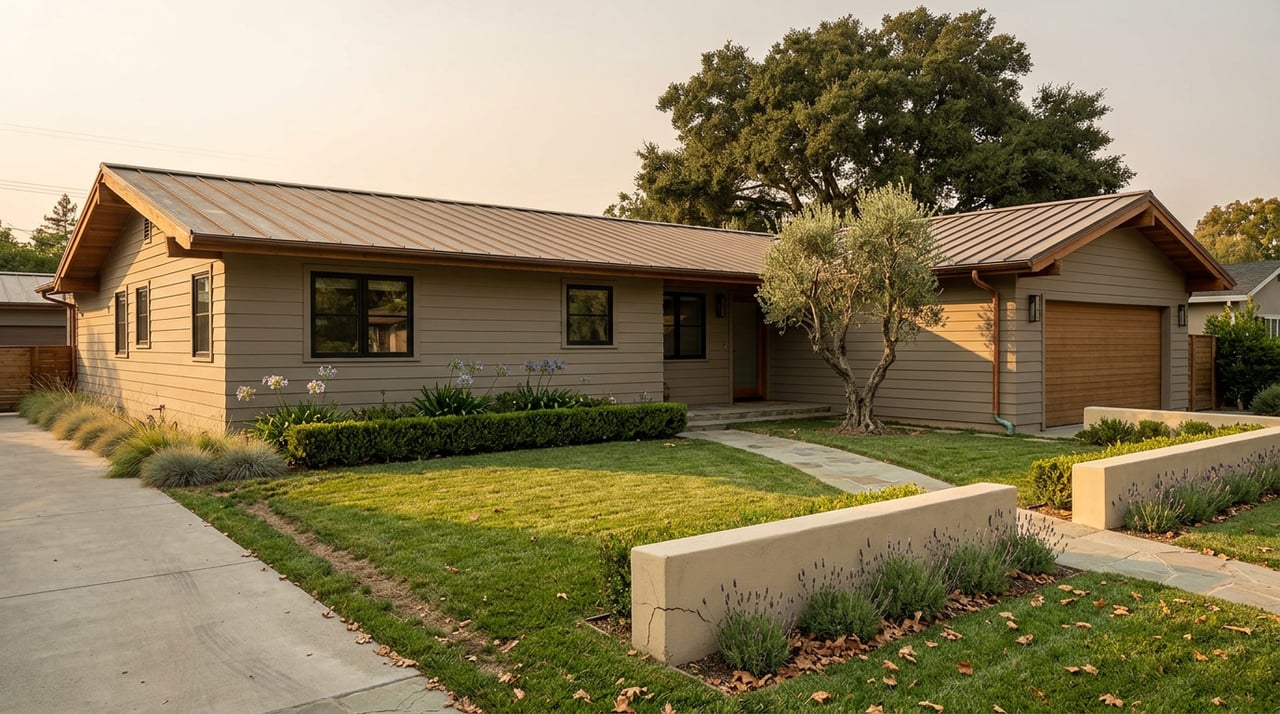
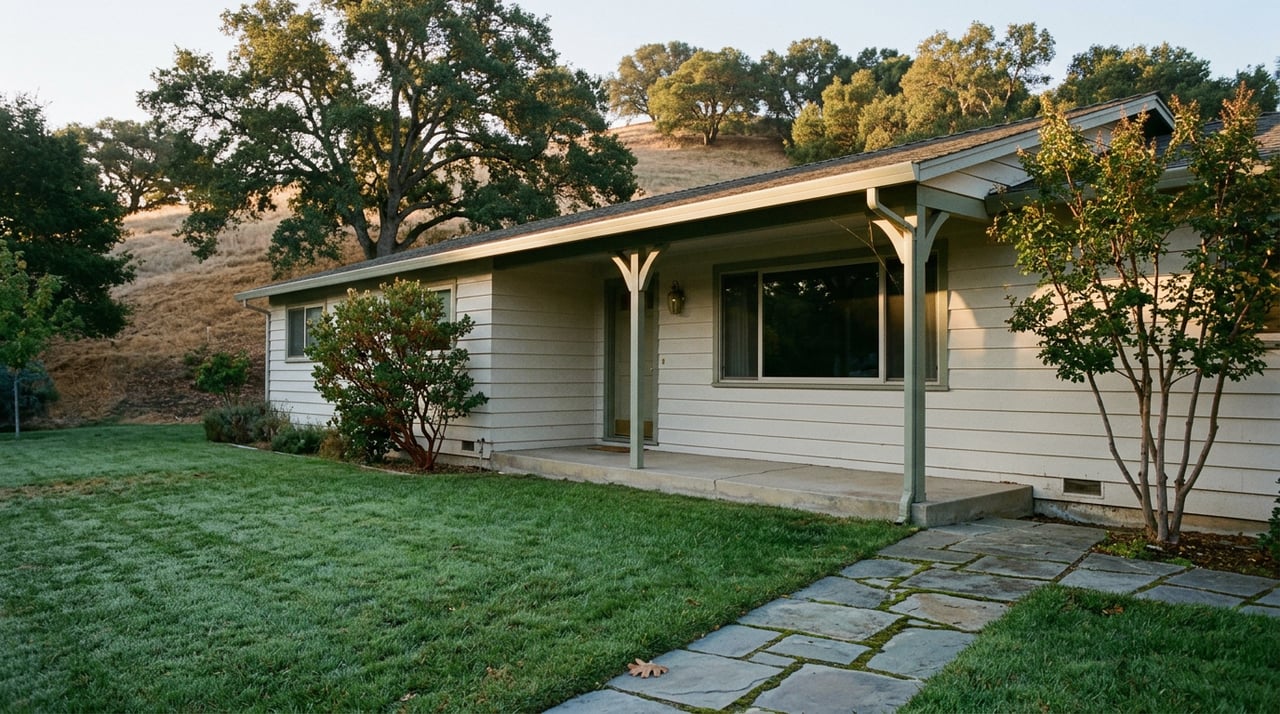
Out toward Vasona Lake Park and the Daves Avenue area, the housing stock shifts again. Single-family homes here start around $1.8 million to $2 million and climb past $5 million for hillside estates, with the mix leaning toward ranch-style homes on larger lots rather than the dense historic core downtown.
Then there's the fourth market, and it isn't really Los Gatos in the way most buyers picture it.
| Submarket | Typical entry point | What actually drives the price |
|---|---|---|
| Almond Grove / Glenridge | $3M–$6M+ | Walkability to downtown, historic district review on any exterior change |
| Rinconada Hills (gated) | $700K–$1M | HOA-bundled amenities: pools, tennis, lake, clubhouse |
| East / West neighborhoods (Vasona, Daves Ave area) | $1.8M–$5M+ | Lot size, ranch vs. hillside estate, proximity to Vasona Lake Park |
| Santa Cruz Mountains (95033) | Below the valley-floor median | Well vs. public water, road access, fire insurance underwriting |
The unincorporated area above town, reached by winding roads off Highway 17 near Lexington Reservoir, gets folded into "Los Gatos" statistics even though almost nothing about how it prices resembles the valley floor. One local market tracker described the mountain segment as having the widest price range of any Los Gatos submarket, while its median still sits below either of the town's two main ZIP codes. That's not a discount. It's a different set of underwriting questions entirely.
Public water access is the clearest example. A mountain property that recently closed after a full remodel was marketed specifically around its connection to San Jose Water, described as a rare advantage that removes well dependency from the equation. For most mountain parcels, a well is simply part of the deal, and that changes financing, insurance, and resale in ways a flat-lot buyer in town never has to think about. Fire insurance underwriting and road conditions get their own line of due diligence up here, separate from anything a downtown or Rinconada Hills buyer would face.
Construction economics tell the same story from a different angle. On hillside lots in Los Gatos, Monte Sereno, and western Saratoga, sitework alone commonly runs 10 to 15 percent of total project cost, according to a 2026 breakdown from Bay Area builder Barcci Builders, compared with far less on the flat lots common in Campbell or Willow Glen. Even a straightforward teardown lot in downtown Los Gatos, on a standard 7,000 to 10,000 square foot parcel, was selling in the $1.8 million to $2.5 million range as of that same report, before a single wall goes up. In Los Gatos specifically, residential plan check in 2026 runs 10 to 12 weeks, a real number if you're weighing a remodel against a move.
None of this means Los Gatos is unreadable. It means the read has to happen one level down from the headline. If you're relocating from another part of the Bay Area, or comparing Los Gatos to Saratoga or Campbell before you commit to a search radius, the town-wide median is the wrong instrument for that comparison. Here's the version that actually holds up:
If you're weighing Los Gatos against a home you could build or renovate instead of buying outright, that same submarket logic applies to construction costs, permitting timelines, and lot economics, not just sale prices.
Is Los Gatos a buyer's market or a seller's market right now? It depends which slice you're standing in. Single-family homes in the valley floor neighborhoods have moved quickly through most of 2026, while the condo and townhome segment has shown rising inventory alongside softer sale-to-list ratios over the same period. The mountain market cooled in the spring after several months of warming. All three of those can be true in the same town at the same time.
Why do list price and sold price tell such different stories? List price reflects what's currently on the market and what sellers think it's worth today. Sold price reflects what actually closed, often weeks or months earlier, and skews toward whichever submarket happened to have inventory moving through escrow during that window.
Does the median matter at all if I've already found a specific street I like? Less than you'd think. Once you're comparing a specific block in Almond Grove or a specific unit in Rinconada Hills, the town-wide number becomes background noise. What matters is recent activity on that street, in that HOA, or in that price tier, which is a narrower and more useful question than "what's Los Gatos doing."
Comparing towns before you've narrowed to a submarket is like comparing grocery bills without checking what's in the cart. The number isn't wrong. It's just not answering the question you're actually asking.
If you're weighing Los Gatos against another South Bay town, or trying to figure out which of its four very different markets actually fits what you're looking for, Renovato & Co. can walk through the real comparison with you, street by street rather than headline by headline. Let's Begin.
This article is general information, not legal, tax or financial advice. Consult a qualified professional about your situation.
Stay up to date on the latest real estate trends.


From first conversation to final signature, you're guided with intention, care and unwavering integrity.